The overlooked ownership question
Most people shopping for an e-bike compare the obvious things first: range, battery size, motor power, price, and top speed. Those specs matter. But there is another buying signal that rarely appears on the product page: can anyone near you actually repair the bike?
That question becomes important quickly after purchase. A brake issue, a battery problem, a controller failure, a firmware update, or a replacement display can turn a good bike into a stalled ownership experience if nobody local can help.
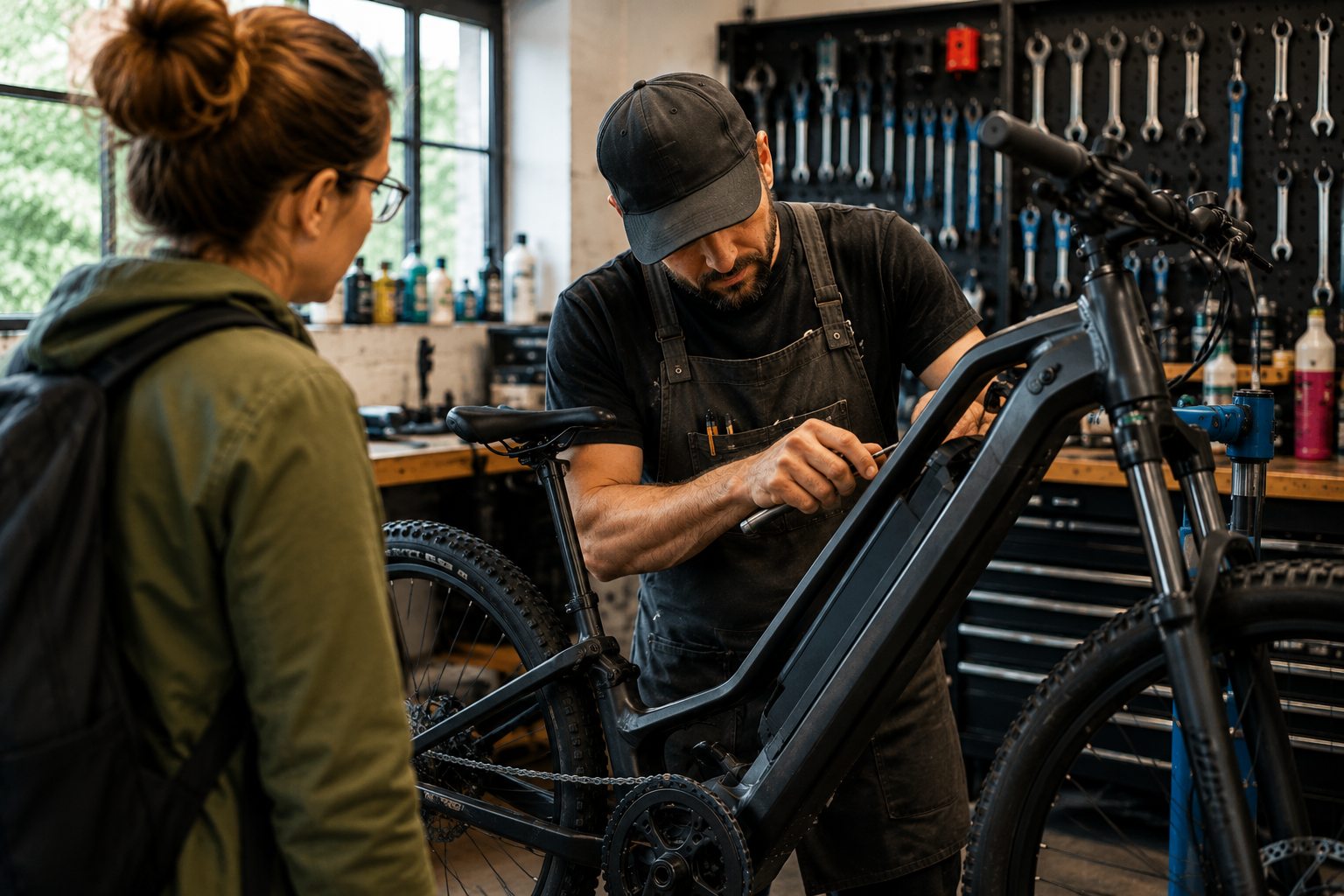
Many riders assume any local bike shop can work on any e-bike brand. In reality, repair support is often more limited. Some shops only service brands they sell. Some avoid direct-to-consumer brands entirely. Some handle mechanical repairs but will not touch electrical systems.
Service is a spec
Repair support belongs next to range, motor, and price.
A long range number can help you imagine the ride. A motor wattage number can help you compare power. Repair support helps you understand what happens when the bike needs attention in the real world.
Local service
Can a nearby shop handle routine repairs and brand-specific questions?
Electrical help
Will anyone diagnose batteries, controllers, displays, motors, or firmware?
Parts access
Are replacement parts available through the brand, dealers, or normal shop channels?
Warranty path
Who handles warranty issues if the brand sells direct and the shop did not sell the bike?
This does not mean every direct-to-consumer e-bike is a bad idea. It means repair support should be part of the comparison. A lower purchase price can still be a good tradeoff if you understand who will service the bike, how parts are ordered, and what the brand does when a warranty issue appears.
Before you buy
Ask these repair questions.
- Does a local shop service this brand?
- Will they work on the electrical system?
- Are replacement parts available?
- Does the brand provide dealer support?
- Who handles warranty issues?
Ownership costs
The repair path affects what the bike really costs.
E-bike ownership costs are not only about the first checkout price. They include parts, labor, downtime, shipping, warranty coordination, and the time it takes to find someone willing to work on the bike.
Mechanical repairs still matter
Brakes, tires, wheels, drivetrain wear, and cargo accessories are ordinary bike-shop work, but e-bikes add weight and use those parts harder.
The expensive questions are electrical
Battery, display, controller, charger, sensor, and motor problems often require brand documentation, diagnostic tools, or replacement parts.
Direct-to-consumer can shift the job to you
A bike shipped to your door may be a good fit, but you may also be the person finding a willing shop, ordering parts, and coordinating support.
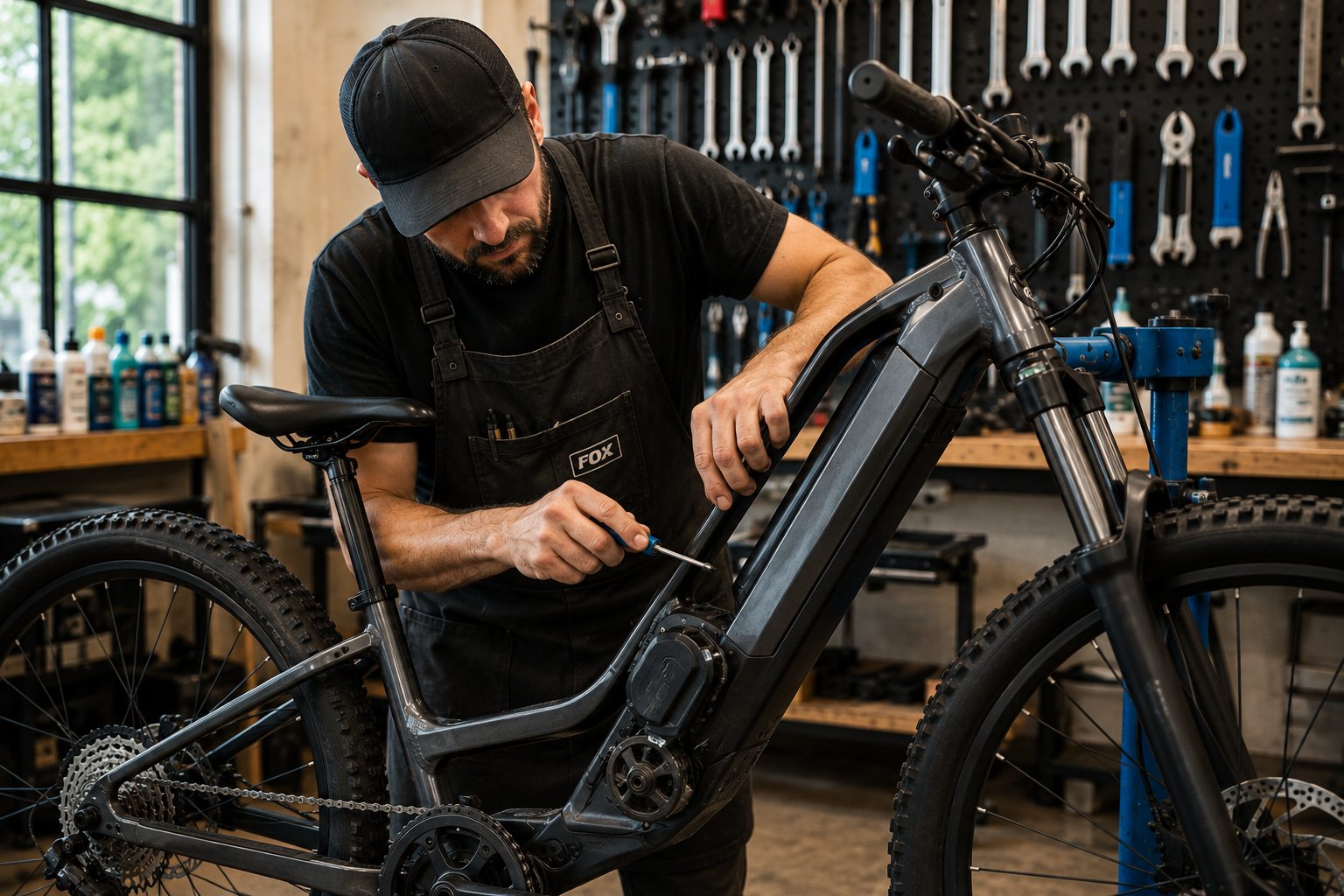
A shop may be perfectly happy to replace brake pads, tires, chains, and tubes on a direct-to-consumer e-bike, but still decline battery or controller work. That distinction matters. When a product page says the bike is easy to maintain, ask what that means for both the bicycle parts and the electrical system.
What to check locally
Call the shop before assuming support exists.
Before buying, contact one or two local shops and ask specific questions. Do they service the brand? Do they work on the electrical system, or only the bicycle parts? Can they get replacement parts? Do they require the bike to be purchased through their store? Will they help with warranty issues if the brand sold the bike directly?
The goal is not to make the purchase feel harder. The goal is to remove the surprise. A five-minute call before checkout can prevent a long search after something breaks.
Before you buy, check repair support.
Use repairability, parts availability, warranty terms, and local-service questions as filters before a bike reaches your shortlist.
Read range signalsHelp riders find brands you actually service.
Add or update your shop's repair coverage so local riders know where to go before they buy.
Send a shop updateAt Ebike Signal, we believe repair support should be treated like any other important buying signal. Not just how far the bike goes, how fast it is, or how powerful the motor sounds, but who repairs it, where support exists, and how ownership works in the real world.
Every spec tells a story.
Repair support tells you what ownership may feel like six months after checkout. Before you buy, read that signal too.