
What this guide covers
Start with the destination, not your home-state habit
State-by-state differences on sidewalks, class 3, youth riding, and trail access can turn a routine ride at home into a restricted ride somewhere else. Travelers need the destination page first because that is where the controlling statewide answer lives.
The route owner often matters more than the bike shop
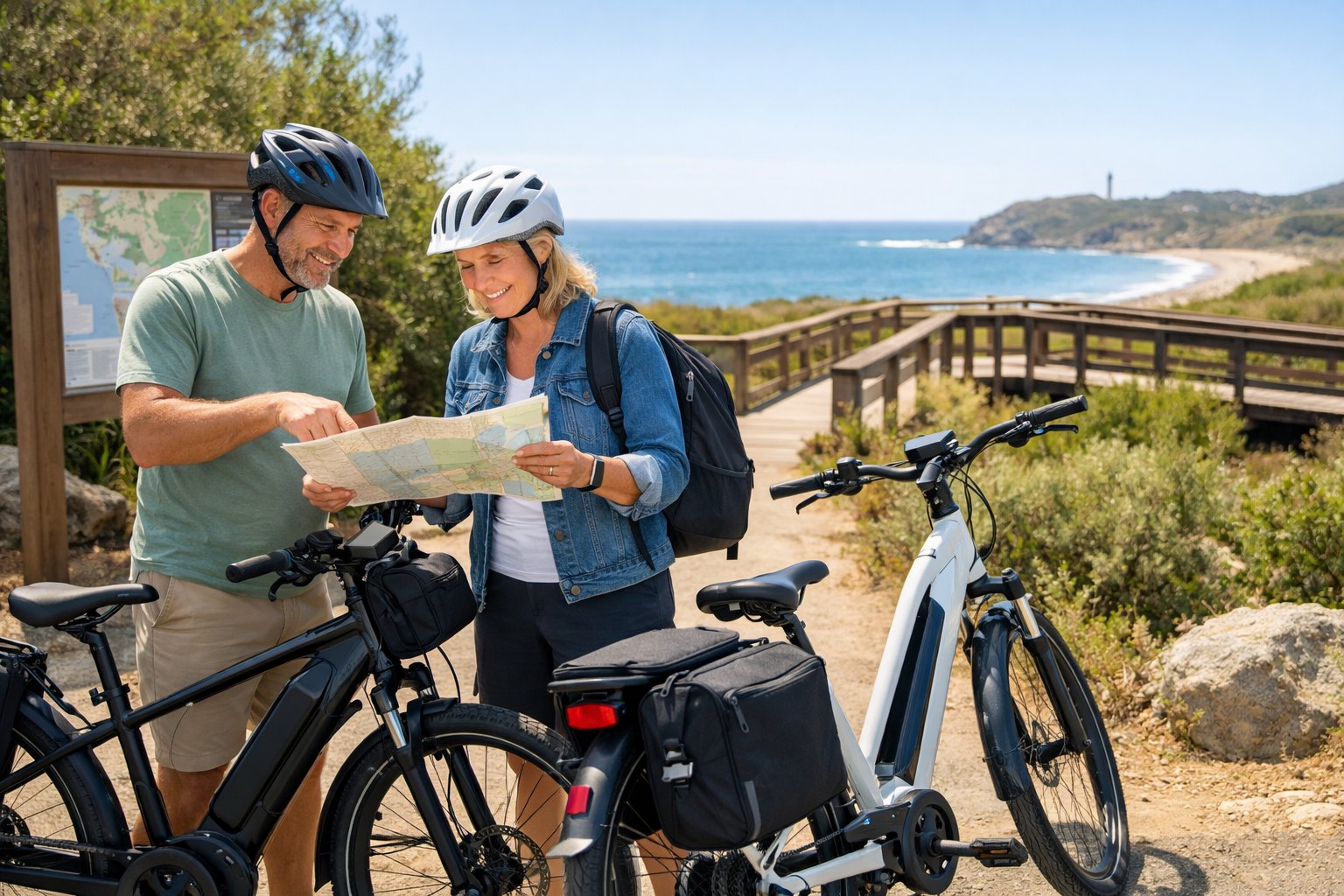
The hardest travel mistakes usually happen on mixed-use paths, beachfront corridors, greenways, and parks. A rental shop can hand you a legal bike and the route can still be governed by a city, county, campus, or land manager that narrows access.
- Street and ordinary bike-lane trips are usually the clearest travel use case.
- Trails, boardwalks, beaches, and natural-surface routes need one extra local or land-manager check.
- If the trip depends on sidewalk riding, treat it as a likely local-rule issue until proven otherwise.
Why rentals can be easier than bringing your own gray-area bike
A visitor using a labeled rental fleet bike usually starts from a cleaner legal position than a rider arriving with a modded bike, a high-speed throttle machine, or an e-moto-style device. That does not guarantee route access, but it lowers classification confusion.
- Ask what class the rental bikes are and whether they are limited to class 1 or class 2.
- Ask whether the rental company has route restrictions of its own, especially around beaches, trails, or boardwalks.
- If you are bringing your own bike, confirm wattage, top assisted speed, and whether the machine still fits the destination state's e-bike definition.
A better pre-trip workflow
The best workflow is simple: compare the two states, open the destination law page, check the route type, and then decide whether to bring your own bike, rent locally, or choose a different route entirely.